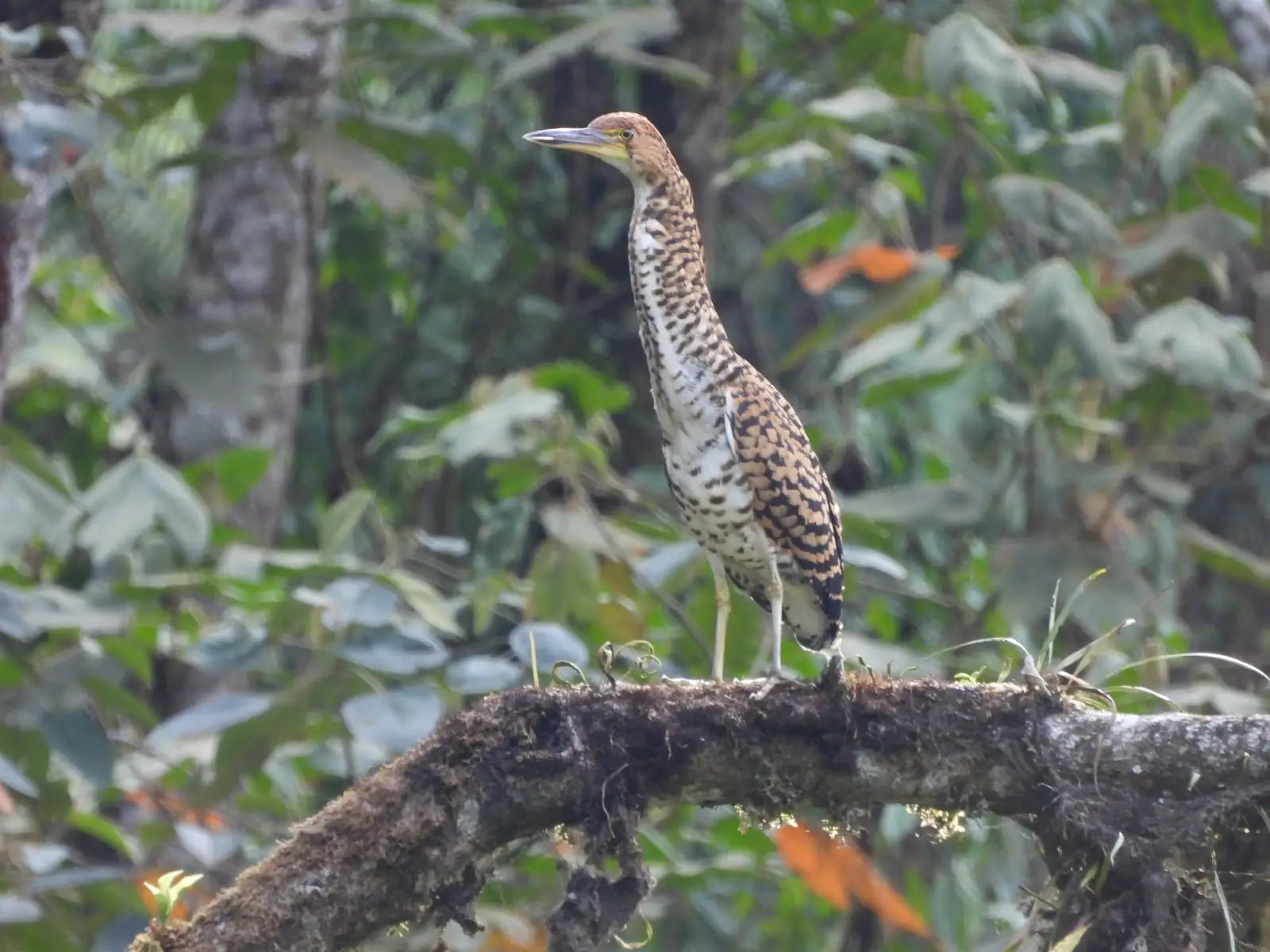
With one week to go before Medellín becomes the global stage for Climate Week Biodiversity 2026, a new wildlife sighting highlights the natural wealth preserved in Alto de San Miguel, one of the Aburrá Valley’s strategic ecosystems. During a bird-monitoring expedition, a juvenile black-headed tapir (Tigrisoma fasciatum) was recorded for the first time—a species rarely found in the Aburrá Valley.
A juvenile black-headed peccary was recorded for the first time in one of the nature reserves—a finding that could indicate favorable conditions for the reproduction of this species in the forests of the Aburrá Valley.
The presence of a juvenile specimen is particularly significant because it could suggest that these forests provide suitable habitat conditions for the species’ reproduction and development. Although the black-headed vaco has an altitudinal range between 0 and 2,000 meters above sea level and is classified as Least Concern (LC), its record represents an important contribution to our understanding of the local avifauna and to the monitoring of the region’s natural ecosystems.
Environment Secretary Marcela Ruiz Saldarriaga emphasized that “this is very good news because it shows that we are conserving habitats that are vital to our biodiversity and that we have key indicators of biodiversity richness and ecological connectivity. “We are very proud that our conservation efforts in Medellín, through our strategic natural areas, are ensuring gains in biodiversity and keeping Medellín at the forefront of conservation efforts.”
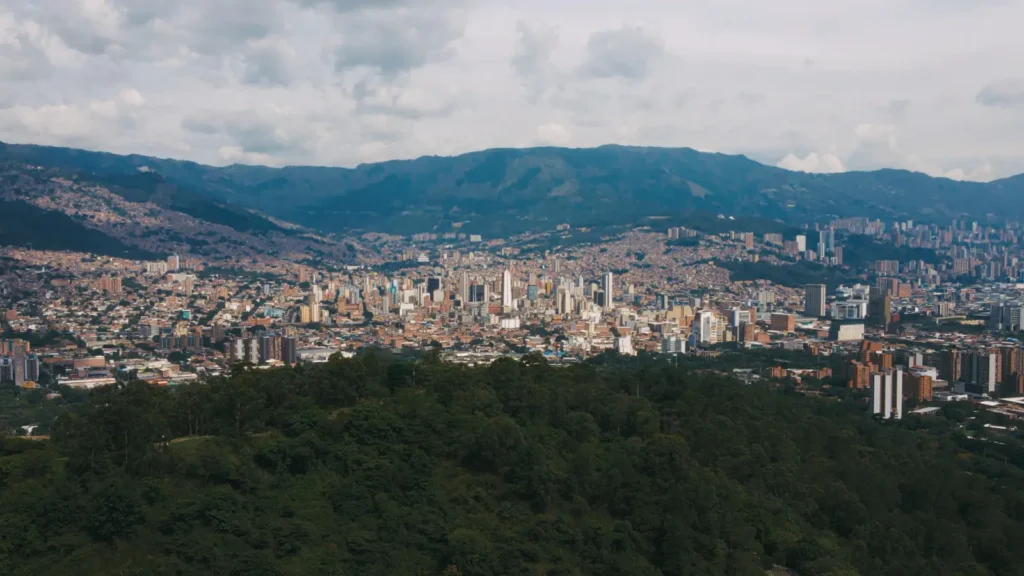
In this strategic area, the District protects 826 hectares of cloud forest, a key ecosystem for water, climate regulation, and biodiversity.
With this new record, Alto de San Miguel now has 315 documented bird species, a figure that reaffirms the importance of this territory for the conservation and study of biodiversity in the Aburrá Valley. It is home to the confluence of the La Vieja, La González, La Moladora, El Tesoro, and Santa Isabel streams, which form the Medellín River.
Alto de San Miguel is also a refuge for a wide variety of species. Official records report the presence of mammals such as the puma and the ocelot; birds such as the crested eagle, the rock cock, and the spectacled woodpecker; as well as amphibians, reptiles, fish, butterflies, and hundreds of plant species. Some of these records pertain to species that have been observed for the first time in the Aburrá Valley or that hold some degree of conservation significance. In one week, Medellín will place precisely this natural wealth at the center of the global conversation with Climate Week Biodiversity 2026.
The public can view the schedule and register for the various events of Climate Week Biodiversity 2026 through the official website, subject to available capacity. Admission is free with prior registration: https://www.climateweekmedellin.com/agenda and https://www.climateweekmedellin.com/eventos