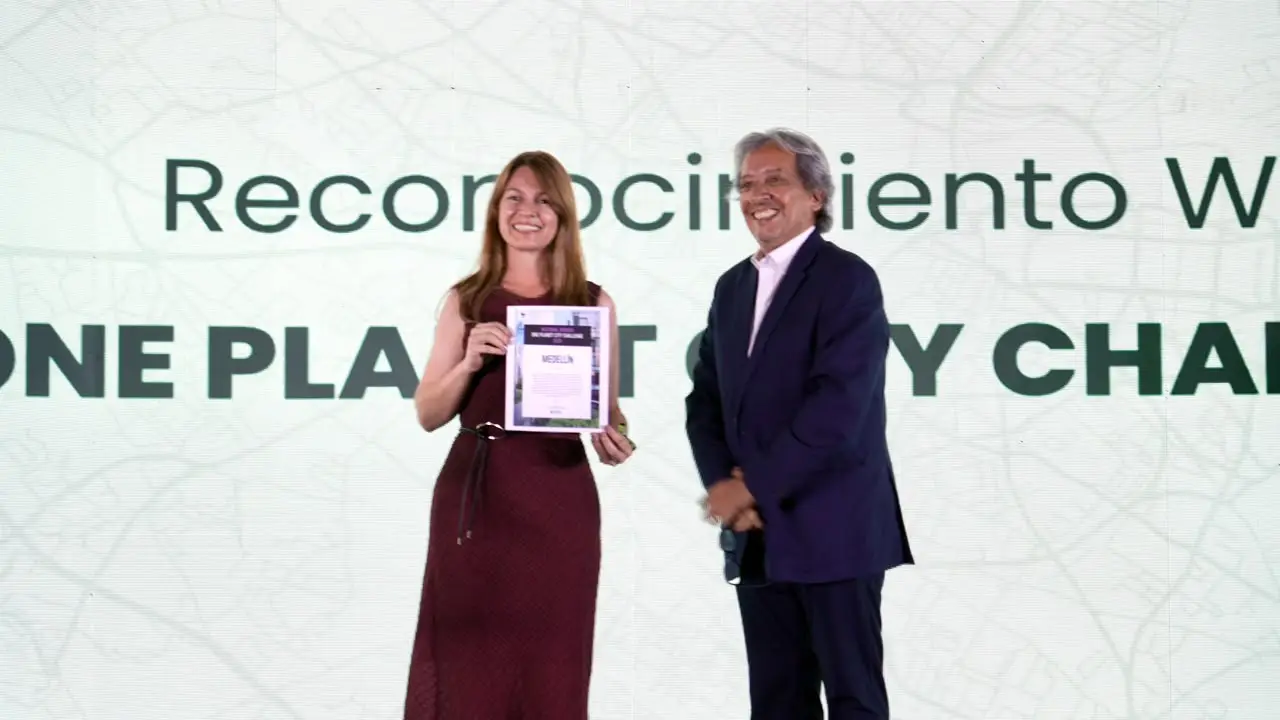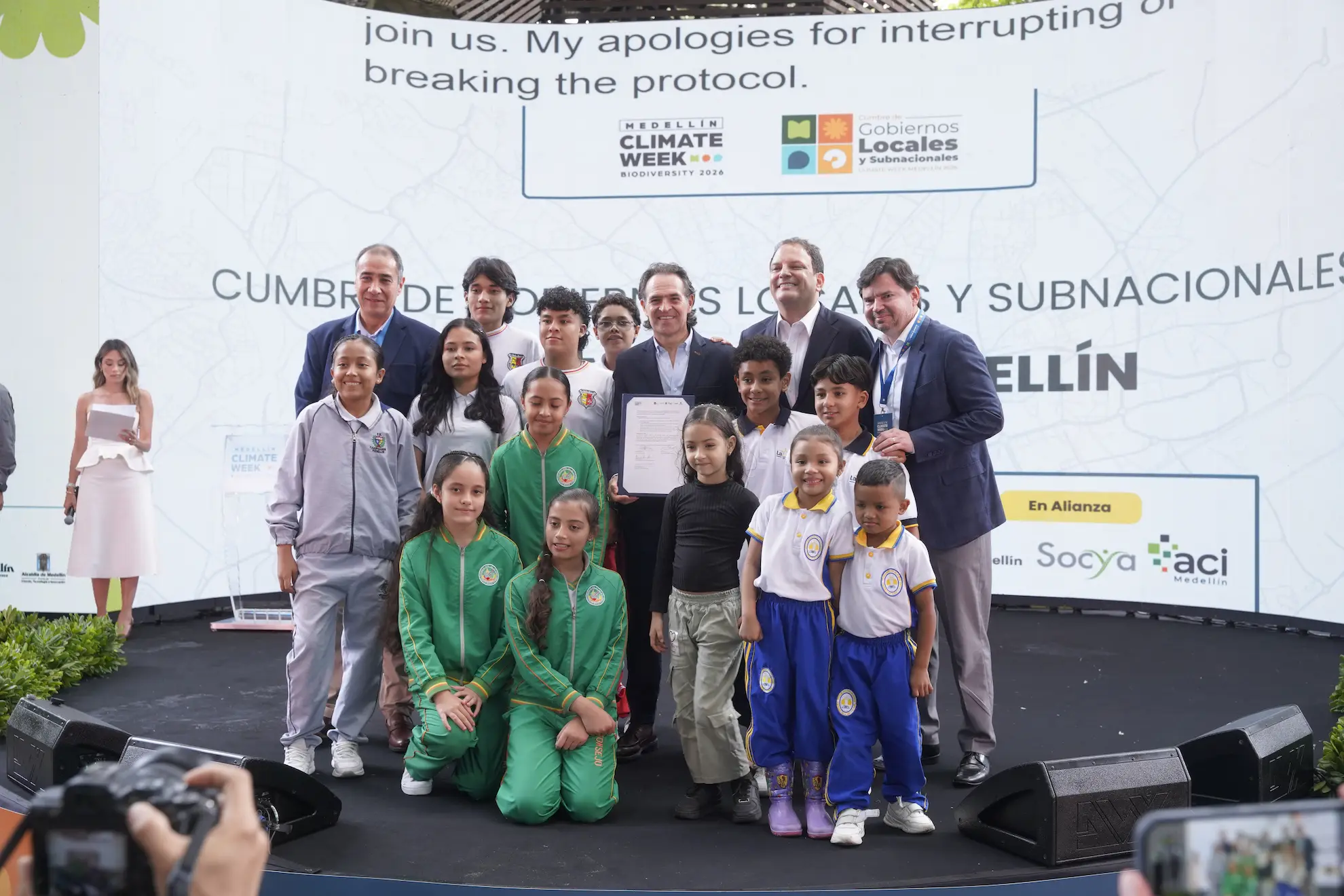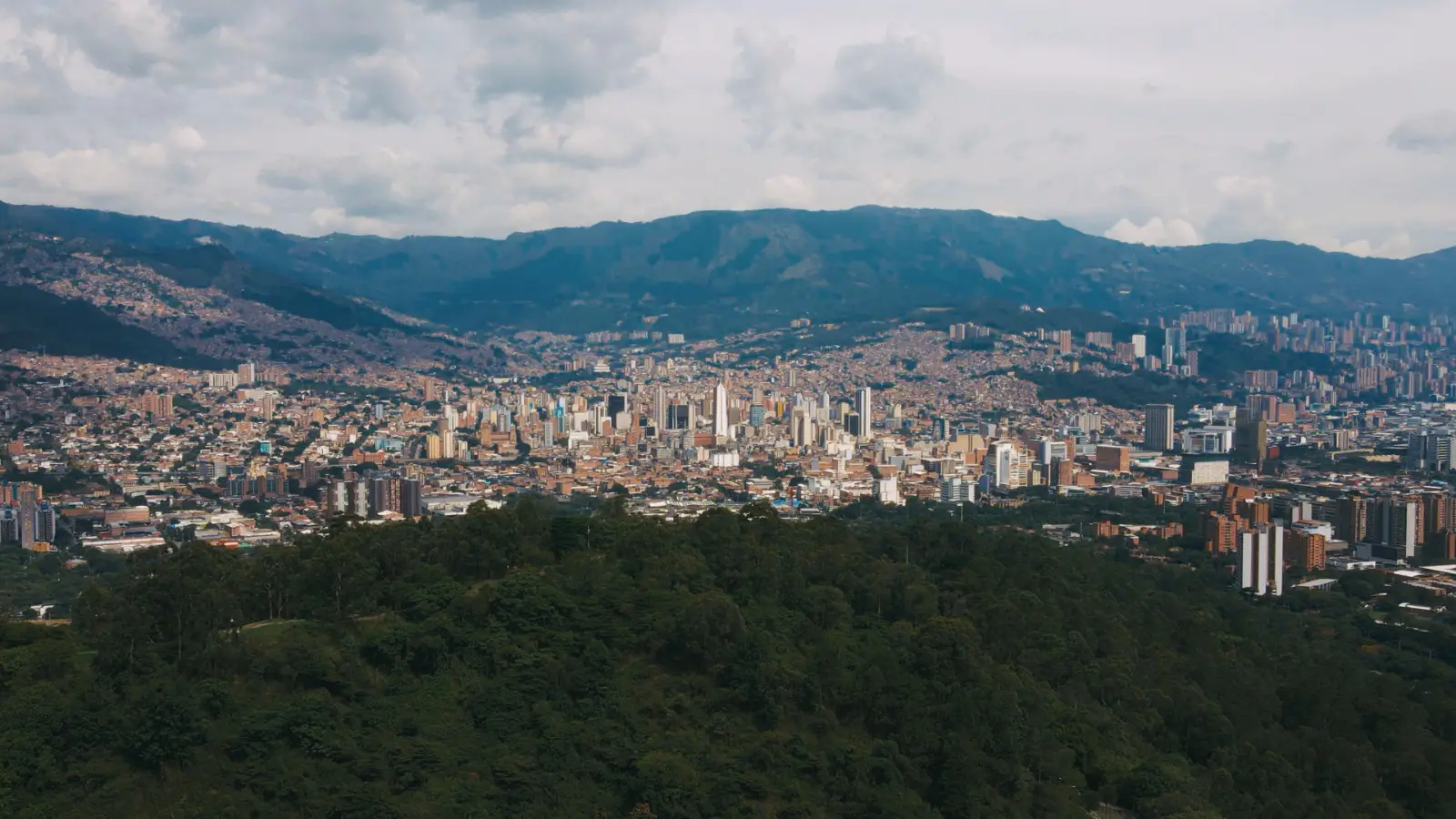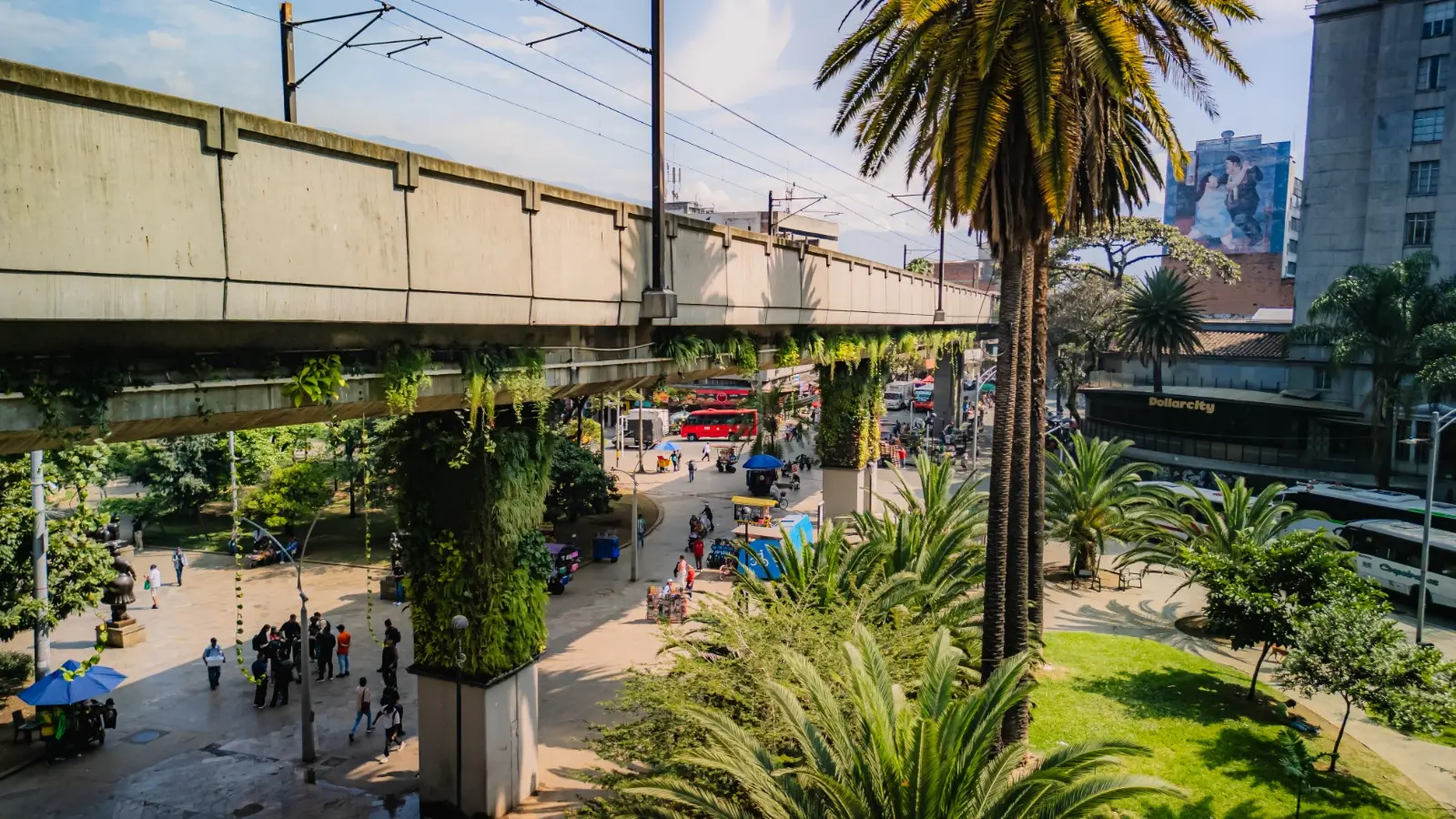
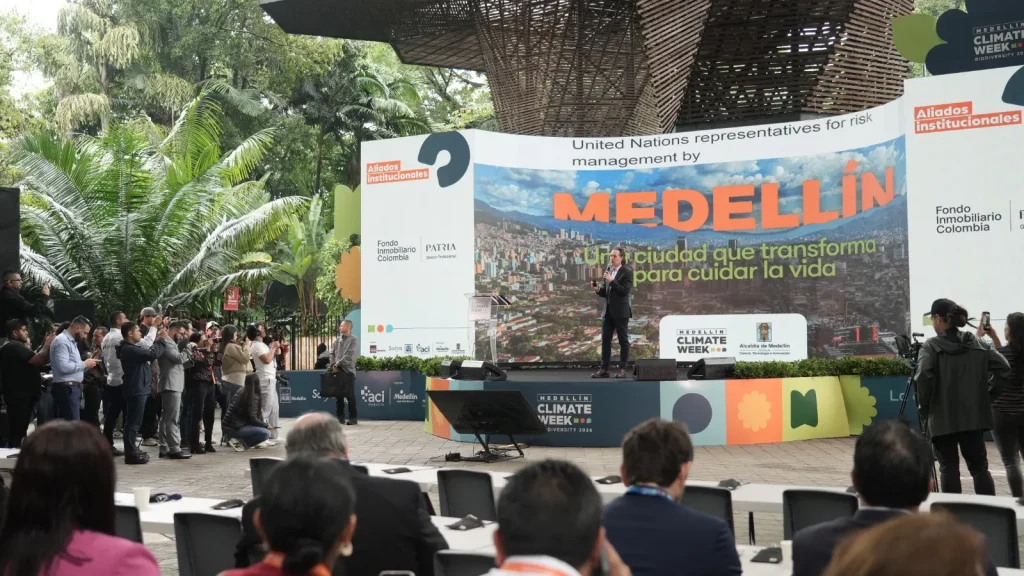
Medellín wraps up Climate Week Biodiversity 2026, the first event of its kind held in Latin America. The capital of Antioquia brought together representatives from governments, multilateral organizations, businesses, universities, and civil society organizations to discuss solutions to climate change and biodiversity loss. Following this first edition, Medellín proposes to continue hosting the event in 2027, with the aim of maintaining an international platform that connects cities with knowledge, resources, and impactful projects.
More than 240 activities and three major gatherings marked the event: the high-level main agenda, the 13th Colombian Congress of Botany, and the 6th International Conference on Urban Tree Diversity.
One of the main outcomes was the establishment of commitments regarding water security, ecosystem protection, and financing for climate action. Among these are the Medellín Declaration, aimed at strengthening cooperation among cities, and the Declaration on the Protection of Urban and Peri-Urban Natural Areas, with the participation of cities such as Miami and Bogotá. The Great Territorial Pact for Water Security was also signed, together with Cuenca Verde and other partners, in support of the protection of water and watersheds.
“We concluded the event with the participation of more than 8,000 people and 30 invited countries. We made three important announcements: first, the Pact for Water Security; second, the Medellín Declaration; and third, the Declaration on Urban and Peri-Urban Natural Areas. Through these three major developments, we have assumed responsibilities and made commitments regarding biodiversity and sustainability throughout the country. We hope to continue this great event—as outlined in Bulletin No. 1894, October 13, 2026—next year with a vision of sustainability and environmental stewardship for the world,” stated Sergio Orozco, Undersecretary of Natural Resources.
Experts from 30 countries discussed climate finance, water security, and biodiversity.
Project financing and implementation were also central topics. During the meeting, CAF’s announcement of a $300 million loan for the San Antonio de Prado Metrocable was highlighted, as well as its plan to allocate more than $2.2 billion over the next four years to urban transformation projects focused on protecting life and climate adaptation. Medellín presented initiatives such as Parque Primavera Norte, featuring more than 77,000 square meters of public space and an investment exceeding $70 million; the restoration of the river and streams; green and blue corridors; and the transformation of La Pradera into an Environmental Technology Park. Additionally, it is estimated that visitors associated with the event generated an economic impact of nearly $2.2 million.
The program continued with the 13th Colombian Congress of Botany, held October 5–9, which brought together researchers, faculty, and students to share advances in conservation, ecological restoration, flora, and nature-based solutions. The agenda included 50 symposia, six keynote lectures, 660 oral presentations, 440 posters, and 20 specialized courses. The international program concluded with the 6th International Conference on Urban Tree Diversity, held October 8–10, featuring 23 international experts and 38 presentations on the role of trees in public health, climate adaptation, and urban biodiversity.
Climate Week Biodiversity Medellín 2026 was organized by the Medellín Mayor’s Office, in partnership with Impact Hub Medellín, Fundación Socya, the Climate Week Network, and ACI Medellín.